
Understanding Fan Communities
Fan communities are not new. They existed long before social media. What changed is where they live. Facebook groups, Discord servers, Reddit threads, WhatsApp chats. The platforms multiplied, but the underlying behavior stayed the same: a group of people who care deeply about one specific thing, whether that is a music artist, a TV show, a game, or a brand.
Here is something most people get wrong about fan communities. They assume fans spread their devotion evenly across lots of things. They do not. A person might casually follow dozens of artists or brands, but the ones they would actually travel for, buy merch from, or defend in an argument? One. Maybe two. Maybe three at the outside. Everyone else is background noise. That distinction between casual followers and genuine fans is everything, because genuine fans are the ones who install an app, add a wallet pass, turn on notifications, and actually show up when you ask them to.
The problem with building fan communities on social platforms is that you are building on someone else’s property. Your Facebook group members belong to Facebook. Your Discord community exists at Discord’s discretion. If the platform changes its rules, throttles your reach, or shuts down your group, you lose the community you built. Facebook tried at least seven times to launch gated fan content features. Every attempt failed. Apple launched Apple Connect for music artists and it was dead within a few years. If those two companies, with all their resources, could not make platform-hosted fan communities work long term, the model has a structural problem.
The fan communities that last are the ones where the creator or brand owns the relationship directly. That might be through a branded app, an email list, or a wallet pass that sits on the fan’s phone and lets you send push notifications to their lock screen. The mechanism matters less than the principle: if you cannot reach your community without asking a platform for permission, you do not own it.
The Digital Evolution of Fandom
Of course, the internet didn’t create fandom. It removed the geography from them. Before the web, being a fan of something niche meant you were probably the only person in your town who cared about it. You might find a few others at a convention once a year, but day to day, fandom was a solo activity for most people.
What changed online is that a person in Birmingham and a person in Buenos Aires who share an obsession with the same artist or game can now find each other in seconds. That matters because it means niche fandoms that would never have reached critical mass locally can build enormous global communities. K-pop is probably the clearest example. The Western music industry did not break those artists. Online fan communities did, coordinating across time zones to stream songs, trend hashtags, and organize purchases at a scale that traditional marketing teams could not match.
But here is the thing that gets overlooked. The platforms where those communities formed captured all the value. The fans did the work. They created the content, recruited new members, organized the activity. And the platform kept the data, controlled the reach, and monetized the attention. The fans built the audience, and the platform owned it.
This is why the smartest creators and brands are now thinking about two separate things: where their community gathers, and how they reach it. A Discord server or a subreddit is a place where fans talk to each other, share content, and build connections. That is the gathering place. But a gathering place is only useful if people show up, and getting them to show up requires a way to tell them something is happening. A new drop just landed. A live stream starts in ten minutes. Tickets went on sale this morning. That announcement layer is a separate problem, and it is one that social media algorithms are increasingly bad at solving. A direct notification channel, like a wallet pass on a fan’s phone, is not a replacement for the community. It is the thing that keeps the community active by making sure people actually hear about what is going on.
Why Thinking of Your Audience as a Tribe Actually Changes How You Treat Them
Seth Godin is a marketing author who has been writing about how businesses communicate with people for over 30 years. His book “Tribes” made a simple argument that stuck: you do not need millions of followers. You need a group of people who genuinely care about the same thing you care about, and you need to lead them. That group is your tribe.
What makes Godin’s idea useful is not the label. It is the shift in how you think about the people on the other side of the screen. Marketing departments talk about “leads” and “users” and “subscribers” as if these are categories in a spreadsheet. When you think of the same people as a tribe, something changes in how you communicate with them. You stop broadcasting at a demographic and start talking to a group of people who chose to pay attention to you.
Think about the people who queue overnight for a new iPhone. Think about the ones who refresh a ticket page at 9am trying to get into Glastonbury. Think about someone who has bought the same brand of coffee for a decade even though cheaper options sit right next to it on the shelf. These are tribes. They exist around music artists, around creators, around brands of every size. And the thing they all have in common is that their loyalty is emotional, not transactional. They did not do a cost benefit analysis. These loyal fans drive whatever you do.
The practical difference this makes is in how you communicate. If someone is a “lead,” you send them a conversion sequence. If someone is part of your tribe, you send them something worth receiving. That distinction sounds small, but it is the difference between a push notification that gets muted after a week and one that someone looks forward to. The brands and creators who treat their audience as a tribe they have a responsibility toward, rather than a list they have access to, are the ones whose communities actually grow.

“Fans don’t just buy a product. They join a tribe.” – Seth Godin
How Fan Communities Build Their Own Culture
Every strong fan community develops its own language, and that language tells you something important about how deep the community runs. If outsiders cannot understand what members are saying, the community has reached a level of identity that goes beyond casual interest. It has become a culture.
Some of this terminology has crossed into mainstream use. “Stan” started as a reference to the Eminem track about an obsessive fan and became a verb meaning to support someone intensely. “Ship” means wanting two people (usually fictional characters) to be in a relationship. “Fanfic” is fan-written fiction using existing characters and worlds. “OTP” (One True Pairing) is a fan’s favorite character pairing. “Fancast” is fans suggesting actors for roles in adaptations that do not exist yet.
These are not just quirky words. They are signals. When a community develops its own vocabulary, it is creating an in-group identity that makes members feel like they belong to something. That belonging is what turns a casual follower into someone who will defend your brand in a comments section, recommend you without being asked, or share your content because they feel like it is partly theirs.
For creators and brands, this matters practically. If you are communicating with a fan community and you do not understand the language they use, you will sound like an outsider talking at them rather than someone who is part of the conversation. The brands that get fan community marketing right are the ones that listen to how their audience already talks and meet them there, rather than imposing corporate language on a group that has already built its own way of communicating.
Why Mobile Is Where Fan Communities Actually Live
Everything we have talked about so far, the tribes, the culture, the language, all of it happens on phones. Not desktops. Not laptops. Phones. That is where fans check for updates, where they talk to each other, where they find out a new single just dropped or that tickets went on sale. If your fan community is not built for mobile, it is not built for how fans actually behave.
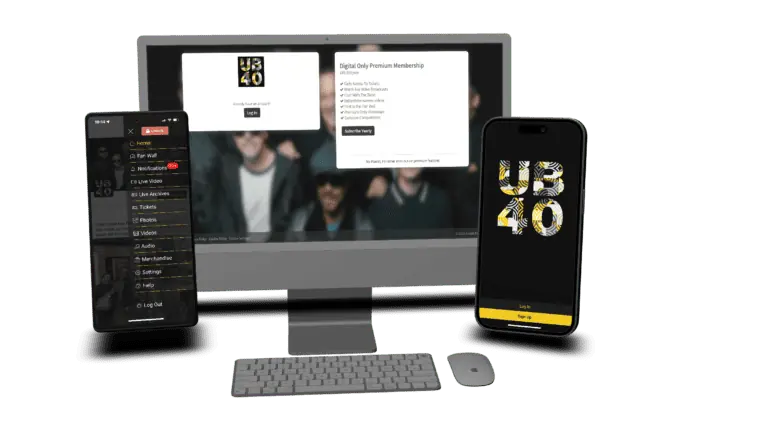
The challenge is reaching those fans on mobile without asking too much of them. Building a native app works if you are an established artist or brand with a large, committed audience who will download it and keep it. That is real and it happens. We have built those apps at FanCircles for years and watched fans install them without hesitation when the creator behind it is someone they genuinely care about.
But most brands and creators are not starting from that position. They are building an audience from scratch, or they have a following scattered across platforms they do not control, and they need a way to gather those people into a direct channel without the cost and complexity of an app.
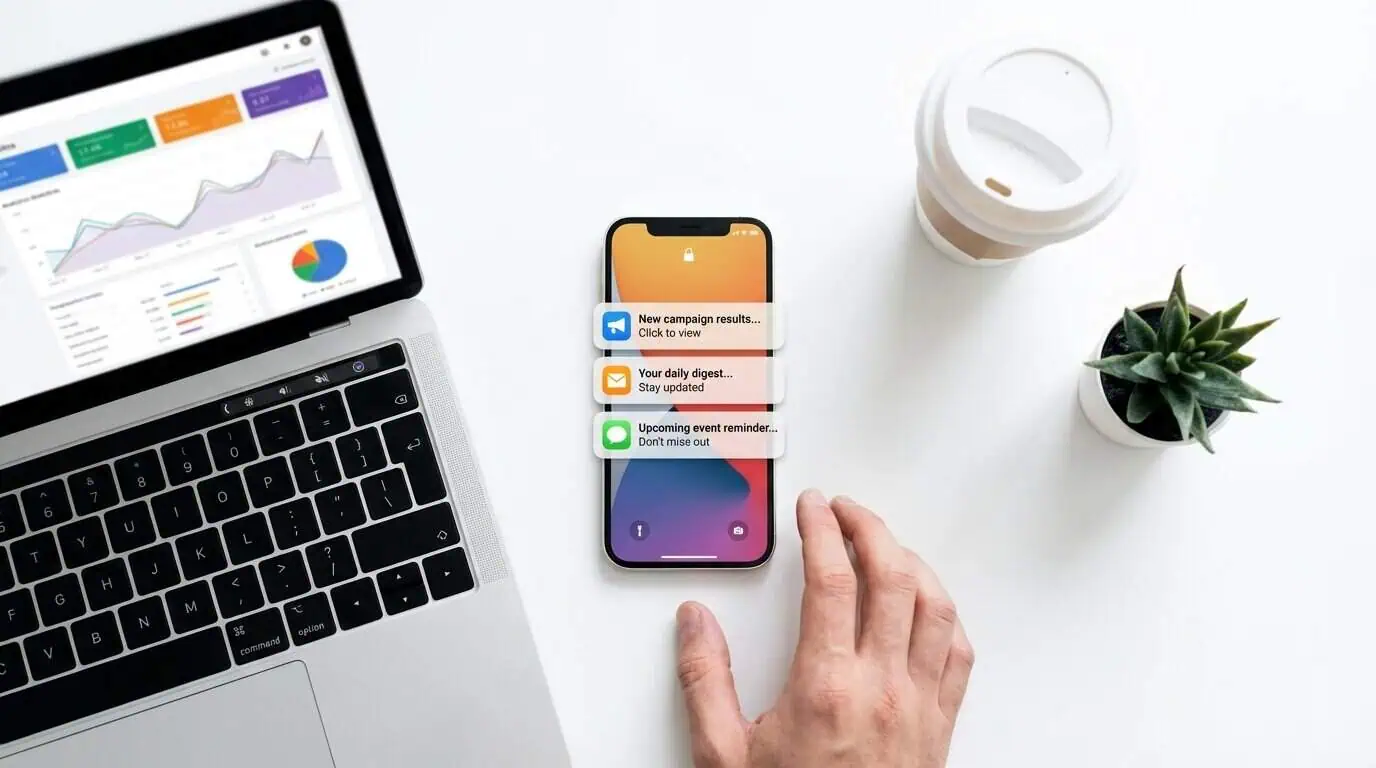
That is the problem PushPass was built to solve. A fan scans a QR code or taps a link. A branded wallet pass is added to their Apple Wallet or Google Wallet in one tap. No app to download. No account to create. No form to fill in. From that moment, you can send push notifications to their lock screen whenever you have something worth saying. The pass stays in their wallet alongside their bank cards and boarding passes, which means it does not get forgotten in an app drawer or deleted in a storage cleanup.
The connection is persistent, the barrier to entry is as low as it gets, and the fan does not need to do anything except tap once to start receiving updates directly from you.
Engaging With Fans Beyond the Notification
Everything up to this point has been about reaching fans. But reaching them is only half of it. The fan communities that grow are the ones where fans have somewhere to go once you have their attention. Fans do not just want to be told things. They want to participate. They want to feel like their attention is noticed and their loyalty is recognized.
That participation looks different depending on the audience and the scale. For some creators, it is live streams where fans interact in real time. For others, it is exclusive content that makes pass holders or app members feel like insiders. For brands, it might be a loyalty program where fans earn points not just for purchases but for actions like sharing a pass with a friend, clicking a link in a notification, or attending an event. The common thread is that the fan does something, and the creator or brand acknowledges it.
The notification is what gets them there. A push to the lock screen that says “we’re live right now” drives fans to your stream. A notification about a new discussion drives them to your Facebook group, your Patreon, your Discord, wherever your community actually talks. The notification is the trigger. The conversation happens wherever you have built a space for it. That is why a direct notification channel and a community space are not the same thing, but they need each other.
At FanCircles, we have built tools for both ends of that scale. For established creators and artists with large, committed audiences, SuperFan Apps put the entire fan club experience inside a branded app: exclusive content, merch, ticketing, live broadcasting, audio releases, free and paid membership tiers, all in one place. For brands and creators building from the ground up or looking for a direct notification channel without the overhead of an app, PushPass gives you a wallet pass platform that rewards engagement, tracks actions, and sends push notifications straight to the lock screen.
Which one fits depends on where you are. If you already have a dedicated audience ready for a full community experience, an app gives you everything in one place. If you are building that audience, or you want a fast, low friction way to start reaching people directly, a wallet pass gets you there without waiting for anyone to download anything. Either way, the principle is the same: own the reach, and point it at the places where your community comes alive.
A 15-minute call. Your brand on your lock screen before it ends.